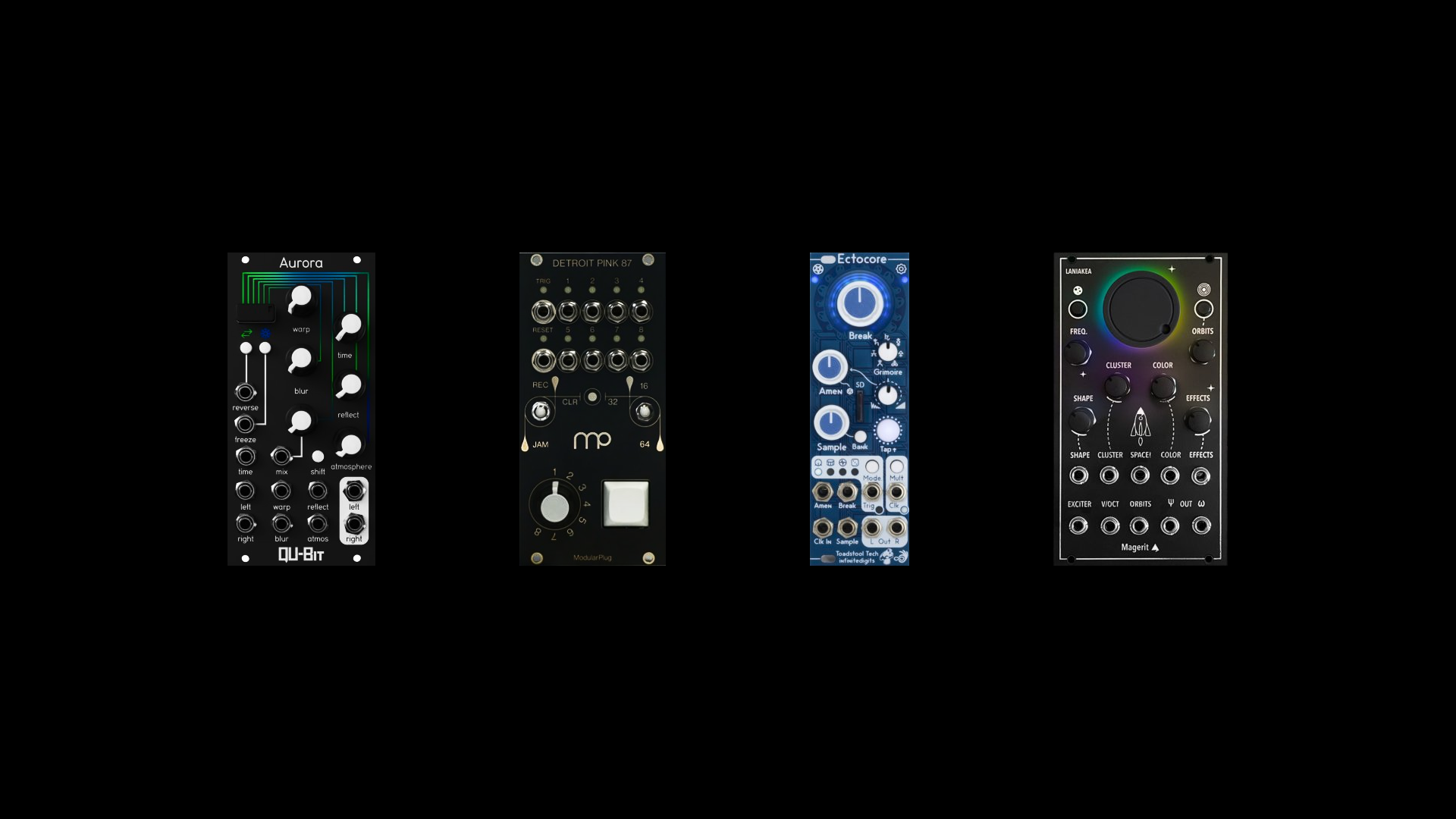
Out of the rack
A modular rig anti-walkthrough.
(5 minute read)I've been dwelling a lot on cultural and ethical topics that are bad for my blood pressure as of late, so I want to take a little detour into something more positive for a change.
Let's talk modules. To start, I love Eurorack modular. I love how geeky it is, how natural it feels to apply concepts in programming to the behaviors of generative patches, the design language of different module shops (might be worth an article in itself), and the overall feeling of invitation to sketch and experiment. Part of that experimentation is also found in module selection, the arrangement and focus of a rig. People create small format rigs, drum machines, generative setups, effects chains, and full-on walls of panels; each rig is unique to the goals of their creators.
And so it's worth talking about the modules that aren't slotted in, the trial runs that despite a good old college try find themselves relisted on Reverb. That isn't to say that these modules are somehow not good; make no mistake, these are excellent pieces of gear. But if a rig is a customized toolset, then it stands to reason that not all tools will be suited for the job in mind. More than anything, the modules rotated out can clarify the overall purpose of the rig and the perspective of the musician at the helm.
Infinite Digits + Toadstool Tech Ectocore
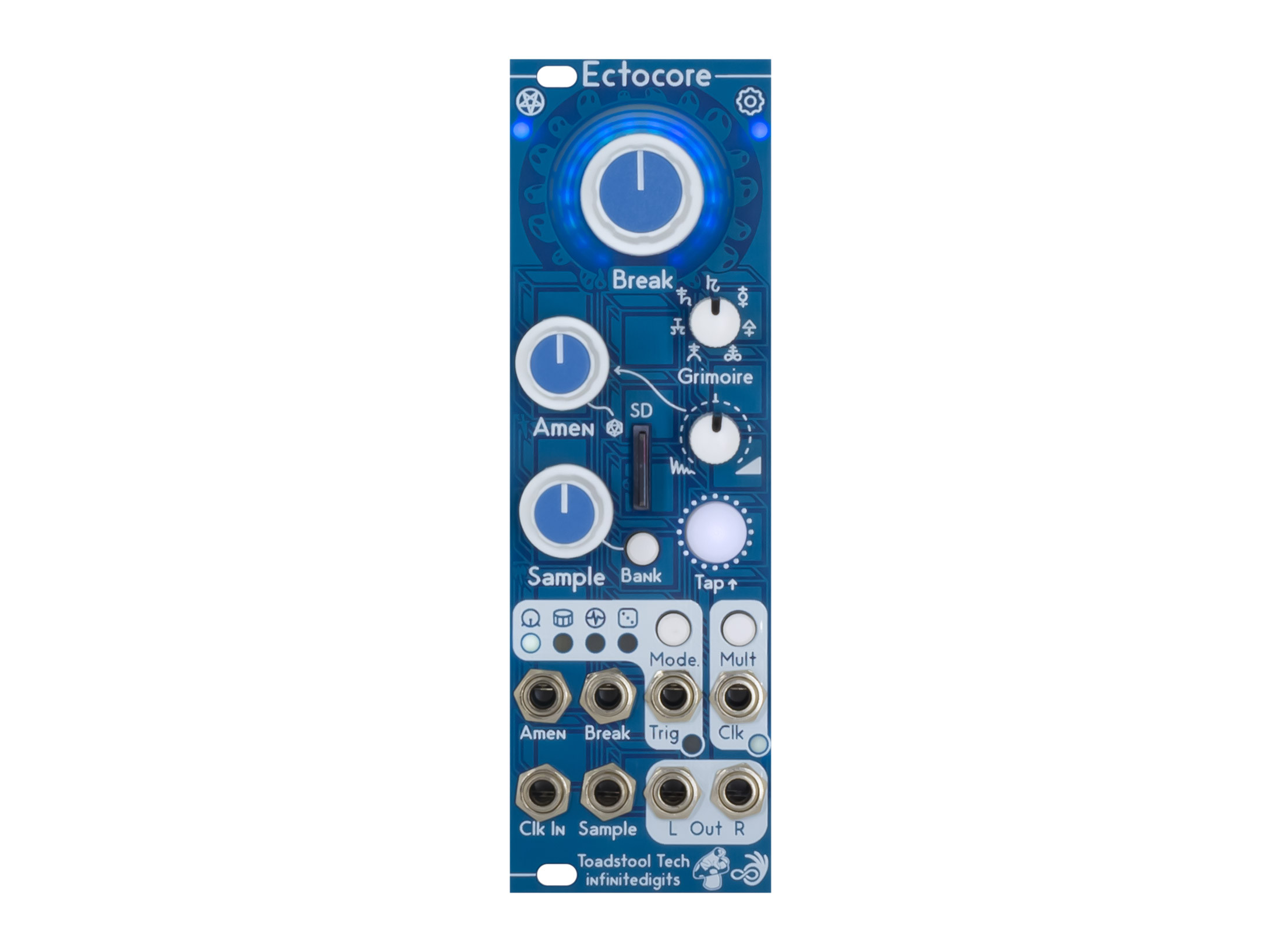
For an open-source module — both hardware and software — the Ectocore is a brilliant breaks-focused sample mangler and it remains one of my favorite pre-orders. Its ability to identify transients in audio, the mind-bending effects in its Grimoire, the pre-loaded sample banks, it's a module that just rips from the moment its plugged in.
But I suppose that I've found it a bit difficult to tame. The amen shaper has a tendency to slice samples in less-than-ideal places, for the most part I keep it fully counterclockwise for the most musical results. The Grimoire effects engine is a ton of fun, yet its sheer chaos is a double-edged sword; it's capable of launching a break into the ionosphere but it just as easily loses its grounding. Pulling a Grimoire'd passage back down to earth in a clock-aware manner is tough stuff.
For my taste, I like building drumlines from the ground up. When I do work with drum samples, I prefer a finer-grained control over timings and sound characteristics. Honestly when it comes to drum samples, you can't beat the 2hp Slice for price and the sheer joy of having a breaks button with a clock parameter (it even has a triplets mode).
The Ectocore overall? Not my tempo. But you best believe that I pre-ordered the Ezeptocore anyway. The makers are driven and creative and I'm elated to support them again.
Qu-Bit Aurora
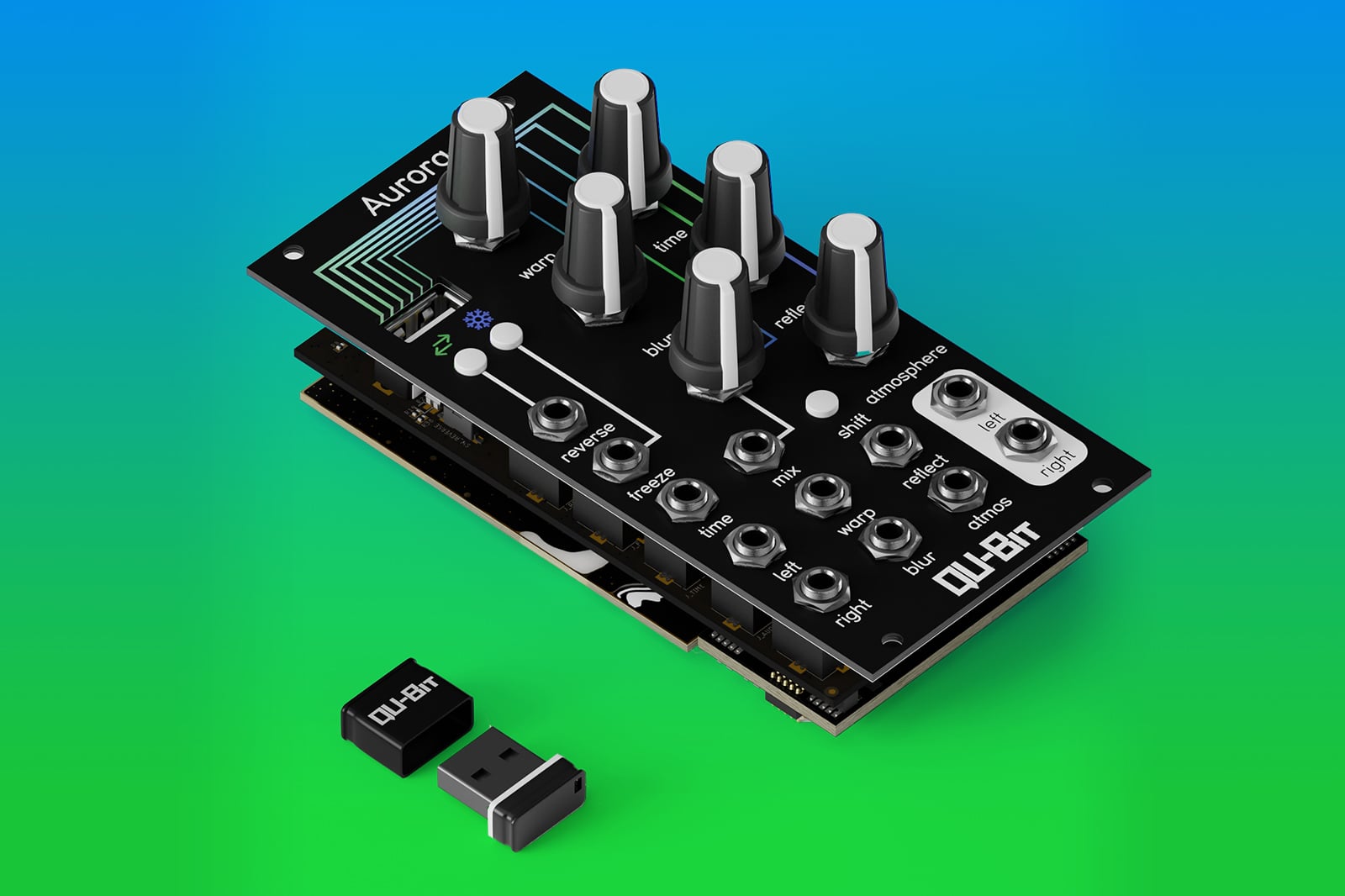
There's nothing like a Qu-Bit effects module; simple enough to hit the ground running but deep enough to really dial in some incredible behaviors. And the Aurora is no exception.
Spectral reverb is an oddball audio effect, it can take the simplest of sounds and stretch them around the event horizon, creating haunting, harmonically-rich soundscapes and drones. There's this sweetspot on the Atmosphere parameter, a sweep between 7 and 11-o'clock, that sounds like color. It's magic.
But it's that ability to create harmonics out of simple audio signals that I find tough to layer into my work. Sounds with more characteristics than a sine, square, or triangle will quickly overwhelm the module's reverb algorithms, including the alternate FDN Verb firmware. It generally becomes a metallic slurry, excellent for drones.
I'm just not a drone guy.
Magerit Laniakea
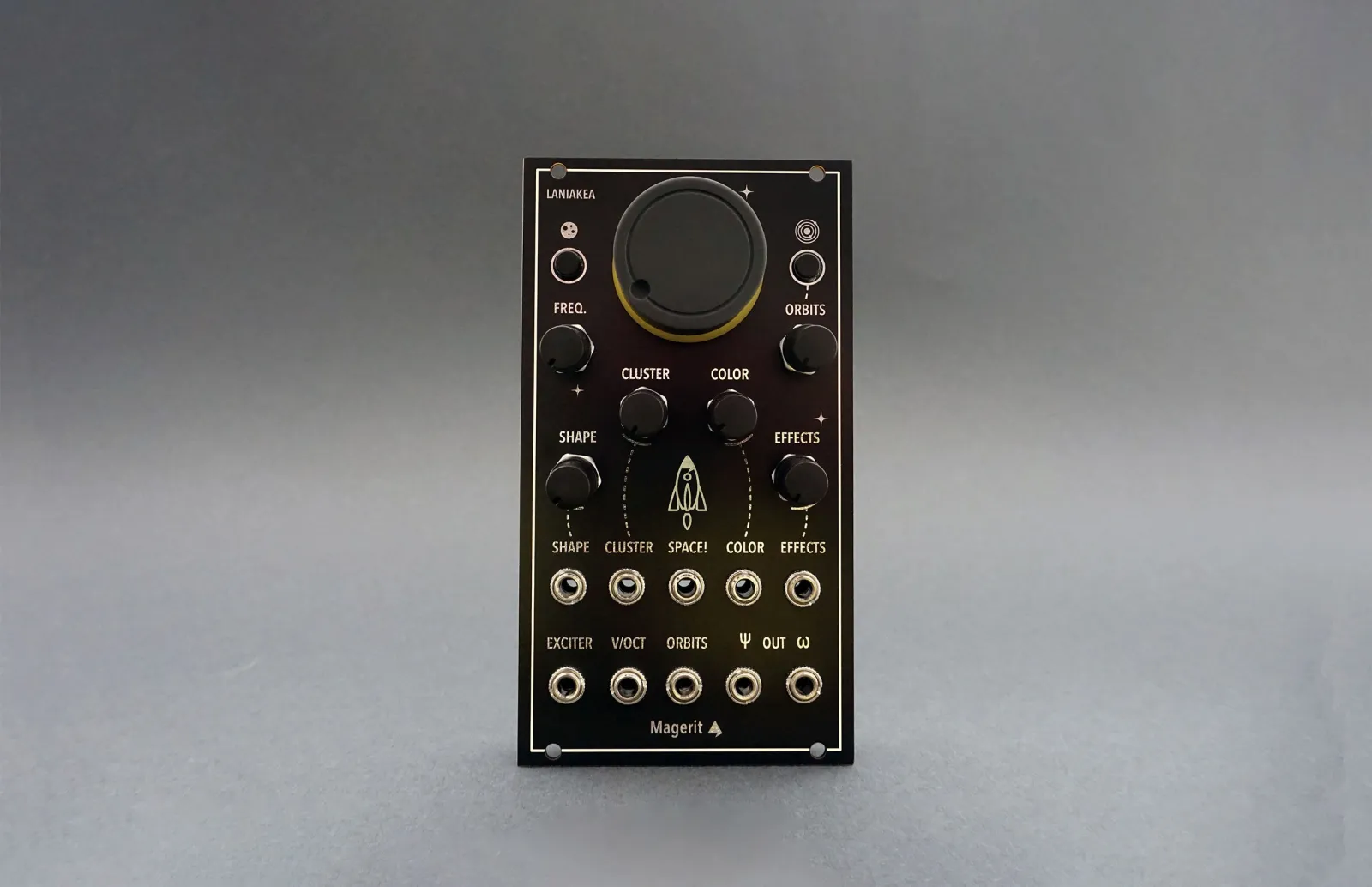
Aside from being an absolutely gorgeous module, the Laniakea is billed as a cosmic oscillator, and it certainly earns the name. At its core, it's a palette of curated wavetables with blended shaping controls, built-in chaos elements, chord voicing, and a pretty impressive post-processing stack on the output. This thing can sound absolutely huge.
Much like the Aurora, the Laniakea's unapologetically harmonic voicing doesn't play well with reverb, including the built-in one. The bulk of its controls orbit around the creation of ever-bigger sounds and my wheelhouse is more plucky, tactile, and minimal. Overall, this module is a one-stop drone shop perfect for a small-format soundscape rig, it could even be said that it's a standalone instrument in its own right.
Not that I have any qualms with its dry signal, the wavetables are excellent on their own. I just don't feel that I'm the right person to own such a module given that I wouldn't find much use out of 90% of its capabilities. Again, not a drone guy.
Modular Plug Detroit Pink 87

This one pains me just a bit since it was just a timing problem. The Detroit Pink 87 while not a novel concept — we had Winterbloom's Big Honking Button — was able to pack in some fantastic features at a fair price point for 2024. A single mechanical switch and an 8-track selector made it simple and satisfying to sequence trigger patterns. I was a particular fan of the "Jam" mode to kickstart other modules with a manual touch. It felt like I had a tiny EP-133 in my rig.
And then MŽOURACK came up with DIKTAAT in 2025. It has four buttons. It solved the problem of saving patterns between power cycles, per-note editing and clearing, internal clocking, per channel muting, it just had so much more quality-of-life to offer for trigger sequencing. At about $35 USD more than the Detroit Pink 87, the value proposition was just too good to ignore.
Closing thoughts
These four modules, by their absence, say a lot about the rig of which they were once part and my particular goals as a musician creating in this format. I prefer to have finer control over my parameters where I can, and for effects that have their own behaviors, I'd like a reliable way of pulling them back on rails. I'm not looking to work with soundscapes and drones, and I'd like to have a say in where and when my effects sit in the chain. Sometimes a well-executed hardware idea is improved upon by another shop; sometimes that happens very quickly.
But ultimately these are all still incredible pieces of gear made by absolute nerds who love this format. Even if I'm not the right owner for these or if their time in the sun has set, I have to imagine that someone somewhere has a rig that brings the best out of each of them. That's the beauty of modular, there's expression and personality not just in the music, but in the curation of the tools as well.
And amazing things happen when a tool finds its way into the right hands.