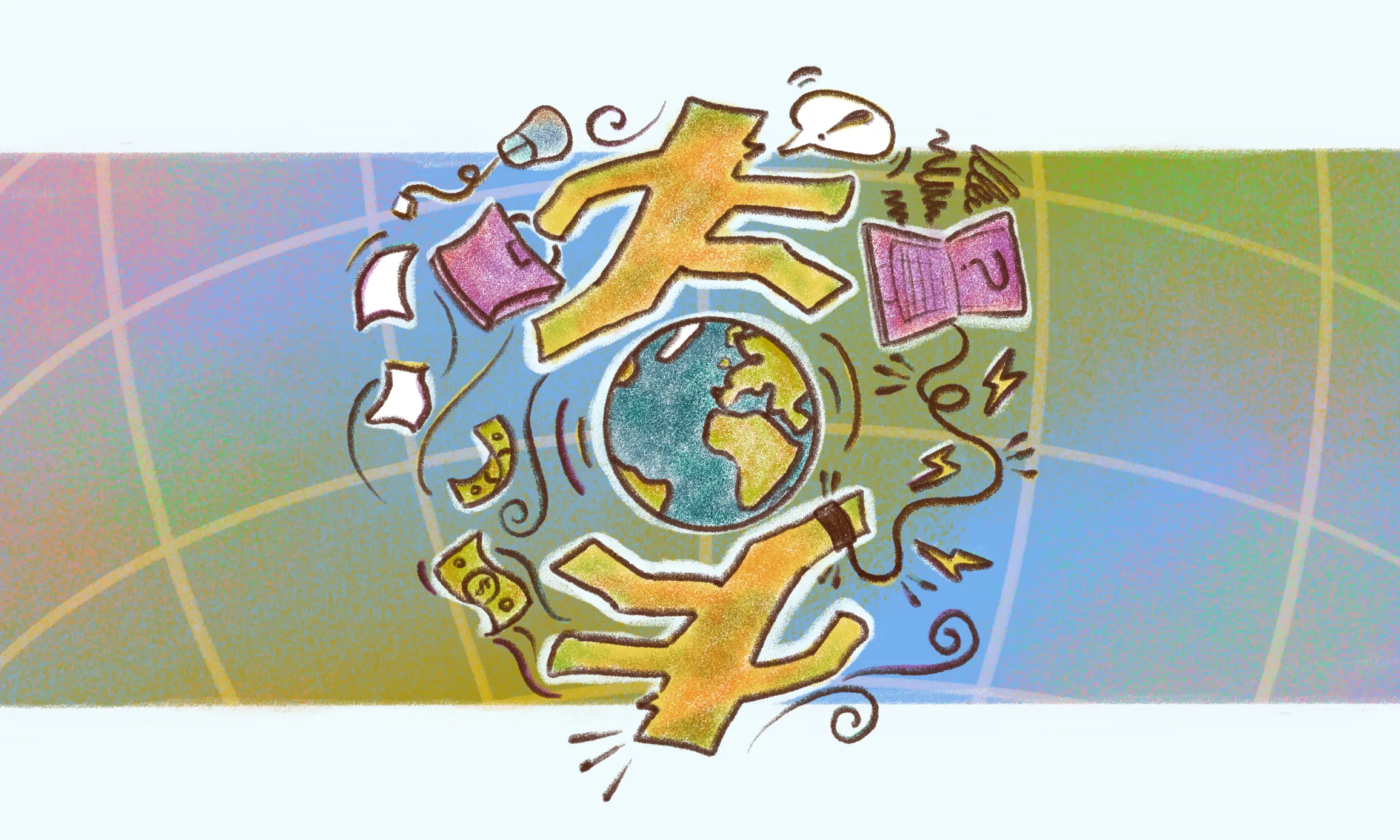
Milgram's world
What will you do with the button?
(10 minute read)Every participant paused the experiment at least once to question it. Most continued after being assured by the experimenter.
In all of last week's PHP and certificate authority scramble, a declaration was made by one Brewster Kahle of the Internet Archive:
@brewsterkahle@mastodon.archive.org
Internet Archive ops staff were heroes last night.
PHP vulnerability announced, soon saw attacks, isolated the vulnerability, used Claude to make fixes for our older php versions, used local models to run simulated attacks, deployed.
reinforced WAF and other guards.
Offline briefly, Back on new versions and running!
Given the severity, there are heroes in many many orgs from last night.
Could have been no lights, no traffic signals, real problems.
Heroes.
Thank you all.
At the same time, there's been a surge in a particular flavor of vibecoded software project — The Photoshop clone, the smart TV optimizer, and now the tidal wave of "reverse-engineer anything" jailbreaks, decompilations, and mods whose existence is understood through either some supposed material harm brought to bear against greedy software mega-corporations or the liberation of closed-source software.
The replies beneath this post on the subject sum up some of that sentiment:
I feel the same way, I loathe AI, but I also loathe companies that lock down devices that you own. So I am enjoying them being fucked by their own devotion to AI.
As an old time, I don't really get all the "vibecoding" disclaimers. Guess I'm from the hacker era, you use what you got to get what you want.
None of those 3 things is going to definitively happen so clearly? Up to us to just make it happen (and my gut is that refraining from "vibecoding" ain't the way to go).
@mcv@friendica.opensocial.space
Companies have always been allowed to do things that individuals are not. This is nothing new. But we shouldn't let that stop us from using every tool to own our stuff.
Reading through the discourse, the slapfights, the theorycrafting, I can't help but be haunted by one particular thought:
A flawed system doesn't get a pass just because some of its outcomes are convenient.
Worth
I've written on this topic before, but as a recap:
No, critics of LLMs and of artificial intelligence — as it pertains to the modern colloquial usage of the term — are resistant to how these technologies are implemented as of late and the effects of that implementation on people and the environment.
- The training datasets for any broadly-applicable LLM or generative system contain massive amounts of copyrighted material created by artists, musicians, and writers who remain to be paid fairly by the corporations who benefit.
- Part of training involves manually screening for explicit and harmful material, typically outsourced to impoverished populations for a pittance relative to the mental harm caused.
- The resources required to train LLMs are a stress on our public utilities and the environment, with taxpayers largely footing the bill for corporations' indiscriminate and wasteful usage of resources.
- The resources required to build the datacenters that allow LLMs to be trained are wresting control of general purpose computation away from the consumer and redirecting the globalized production of computer hardware into the hands of a few corporations.
- "Open-source" models that can be run on self-hosted hardware require all of the above to be true. More open-source models are being made all the time using the same exploitative and extractive methods as their closed-source counterparts.
These points are independent of any other arguments regarding the erosion of human creativity and learning, invasion of privacy due to nonconsensual integration of agentic systems, dire economic conditions caused by overhype, lack of value return, semantic ablation, lack of oversight on AI corporations, weakening of a shared objective reality, deepfake porn, and the beat goes on.
Weighed against all of this, is Photocraft still worth it?
No, the commons are no less exploited because we've swapped one oppressive capitalist force with another. The outputs of these systems aren't worthy of flowers just because those outputs might hurt companies I despise, or help causes I align with. AI doesn't democratize jailbreaking or decompilation or really anything if these activities are impossible without an umbilical link to Anthropic or OpenAI.
These companies have overtly fascist tendencies, and every prompt is an endorsement of their activities, including prompts that help achieve objectives to which I'm sympathetic. Maybe it's just me, but the victory of software that de-telemetrizes my TV rings so very hollow if workers in Ghana and India and the Philippines need to be trampled underfoot for it.
I won't pretend that these products can't do things, they absolutely can. But we need to move past interrogating AI systems' direct outputs — aesthetic, technical, functional — in isolation; those are the exact outputs these bereft corporations want people to see. A sober examination of these systems has to start from the material conditions required for their continued existence, conditions those same corporations try in earnest to sweep under the rug at every turn.
AI products purely exist as a convenience. The world spun without them, the world in most respects continues to spin without them, and life's gotten materially worse for too many people as a consequence of their release. How many AI-powered decompilations will it take to make that harm worth it? Damn near every company with a mass-market AI division has walked back their climate goals to build new gas-powered datacenters coursing with forever chemicals. How many half-baked *arr apps would it take to justify that?
Who among the AI-truthers will look the Kenyan QA worker dead in the eye and say "my sense of comfort is as worthy as your mental health", fully assured of their own righteousness? How can I or any of us look at the Internet Archive now knowing beyond doubt that its bricks are fashioned from that very same suffering? Why is that injustice excluded from their definition of "real problems"? Filtering Claude through the integrity of an institution like the Internet Archive doesn't legitimize Claude, it only corrodes the integrity of the Internet Archive.
Consumers
Even now I can hear the finger-waggers. "Well, you have phone, you have car, you live in a society, curious." And the reality is everything, absolutely everything, we interact with in our very Western, very capitalist context must be held to the same scrutiny. Our very lives are subsidized on someone somewhere having been or currently being screwed over. Our comforts are product of abjectly evil international conglomerates and that reality should make our collective skin crawl. It's why I personally shudder at the thought of a site like MacStories posting fluff pieces mere days after Tim Cook, on behalf of Apple, personally kissed the ring at the White House (though I don't expect better, really).
Ethical purity in consumerism approaches impossible, the clothes on my back and the car I drive all have that dark cloud around them. All I or any of us can do is make the most informed choices we can given our circumstances, fight back where we can, and resist the urge to celebrate choosing the lesser evil when opting out is simply not an option. These choices ought to make us uncomfortable, and that discomfort should inspire all of us to strive for a world in which better choices are possible.
And AI simply doesn't fall into that category of zero-sum choices. Yes, your Photoshop clone will take much more time and effort on your part to develop, but using AI doesn't relieve that effort; it merely offloads it onto someone else in another part of the world, someone who has far graver zero-sum choices to make in their day-to-day and lacks the power to say "no" like we do over here. These products are one of the few things we can opt out of at the expense of our own convenience — convenience which we aren't even entitled to in the first place. It's just so firmly beyond the pale of forced morally-gray decisions that it's a waste of time to split ethical hairs over it.
Beyond that, I submit that there's nothing better to even strive for if the fair-paying, open-weight, 100% renewable AI systems of the future — and they too will exist for our convenience and not our survival — are built on the exploitative AI systems of our present, with "system" meaning all of the inputs, all of the outputs, the companies, the talking heads, the datacenters, all of it.
These harms are happening, here and now, and no amount of hand-wringing, denialism, or laundering through a righteous cause can wave that away. If my resistance to anti-human corporations involves subsidizing their products, involves availing myself of the effort of learning new skills and exercising creativity, then I have to seriously question my own sense of praxis. "You use what you got to get what you want" is not the language of hardened realism but of moral cowardice, a skinwalker wearing the face of pragmatism.
We don't need it
Even with the well as poisoned as it is, projects are still materializing without AI and many take an explicit stance against it.
SDL, a multimedia application library, writes:
We want our code to be art. We want to interact with real humans...We understand some people consider AI to be a useful tool, but we want to connect with you, not your computer.
Password manager ChiPass states in their code of conduct:
The goal of the ChiPass project is to build and distribute well-designed, stable, maintainable, and secure software, and to participate in the open source ecosystem in a way that builds trust and upholds integrity of our commons. These goals are incompatible with the use of large language models or "generative AI" during its development, and no form of participation defined partly or in full by the use of these tools will be tolerated.
Gram Editor is much more blunt about its relationship with AI contributions:
The over-arching goal for now is to excise the Gram codebase of all the shady stuff so that only the good parts remain. First and foremost, that means removing all AI integration and telemetry...It should go without saying but AI-generated and/or AI-assisted pull requests are strictly banned from this project. This codebase is bloated and vibe-coded enough as it is, we need to fix and mend and patch and not start adding to the mess as much as possible.
Git hosting service Codeberg wrote in a post titled Protecting our FLOSS commons from LLMs:
We all pay for hungry LLMs...LLMs are so costly that companies externalize the costs on a massive scale - on those who don't use them and society at large. Increased hardware prices, energy use and environmental damage - we all pay for it!
The negative impacts on infrastructures don't stop there, but also concern more basic civic infrastructure: Due to the energy and water demands that are inherent to the data centers built specifically for training LLMs, many communities already today experience rising consumer costs for both electricity and drinking water. And beyond the rising costs, those living close to the data centers are directly affected by increasing air and noise pollution.
Linux distro ElementaryOS has a generative AI policy that states:
We are taking these steps due to...Ethical concerns including but not limited to those regarding intellectual property theft, environmental impact, externalities that primarily impact already-marginalized groups, devaluing labor for the purpose of concentrating power among the billionaire class, etc.
The good work continues without the need for AI products. It's volunteer effort, donations, and dialogue that make the open-source software commons possible, guided by the principle of building things that last, whatever speed it takes to do so. I think it's fair to say we can all do a better job at supporting good causes.
The button
AI companies succeeded in creating the world's largest Milgram Experiment, and they've given us the button. Ghibli-fied selfies, single-use homelab dashboards, and urgent fixes to digital institutions in the wake of freak security disclosures, functional as they may be, all serve to occlude the fact that the wire runs out from the button and far over the horizon, into the cubicle of the African tech worker, into the bedroom of the college freshman whose deepfaked nudes are being passed around, and into the scores of homes in the hum radius of their nearest datacenter. Press it and you get what you want, fully insulated from the human cost at the electrode end. These corporations, their mouthpieces, and scores of truthers work night and day to convince you that the human cost can just be ignored as long as you can fulfill that prime imperative of getting what you want.
You don't hear the humans on the other side of the wire. But you know as well as I do that they're out there somewhere.
The only ethical response — the only rational response, even — that rises to the urgency of this markedly dark global moment is to reject its usage outright and to resist its proliferation with every skill we have. Resist in conversation, at town halls, online, at the polls, and shoulder-to-shoulder with others refusing to accept the premises laid out by fascistic corporations and those who run interference for them. No cause worth fighting for needs AI, and we simply can't strive for a more just world if our sense of justice dies at the edge of our own convenience.
The button is in your hands. What will you do now?